
Picture yourself walking along pristine white sand beaches where the Indian Ocean meets ancient Swahili culture, but your dream vacation quickly turns into a washout when unexpected monsoon rains trap you indoors for days.
Timing is everything when planning a trip to Zanzibar, and choosing the wrong season can mean the difference between paradise found and paradise lost.
Understanding the best time to visit Zanzibar requires more than just checking average temperatures. This tropical archipelago off Tanzania’s coast experiences distinct wet and dry seasons, varying crowd levels, and changing sea conditions that dramatically impact activities like diving, snorkeling, and beach relaxation.
Understanding Zanzibar’s Climate Patterns
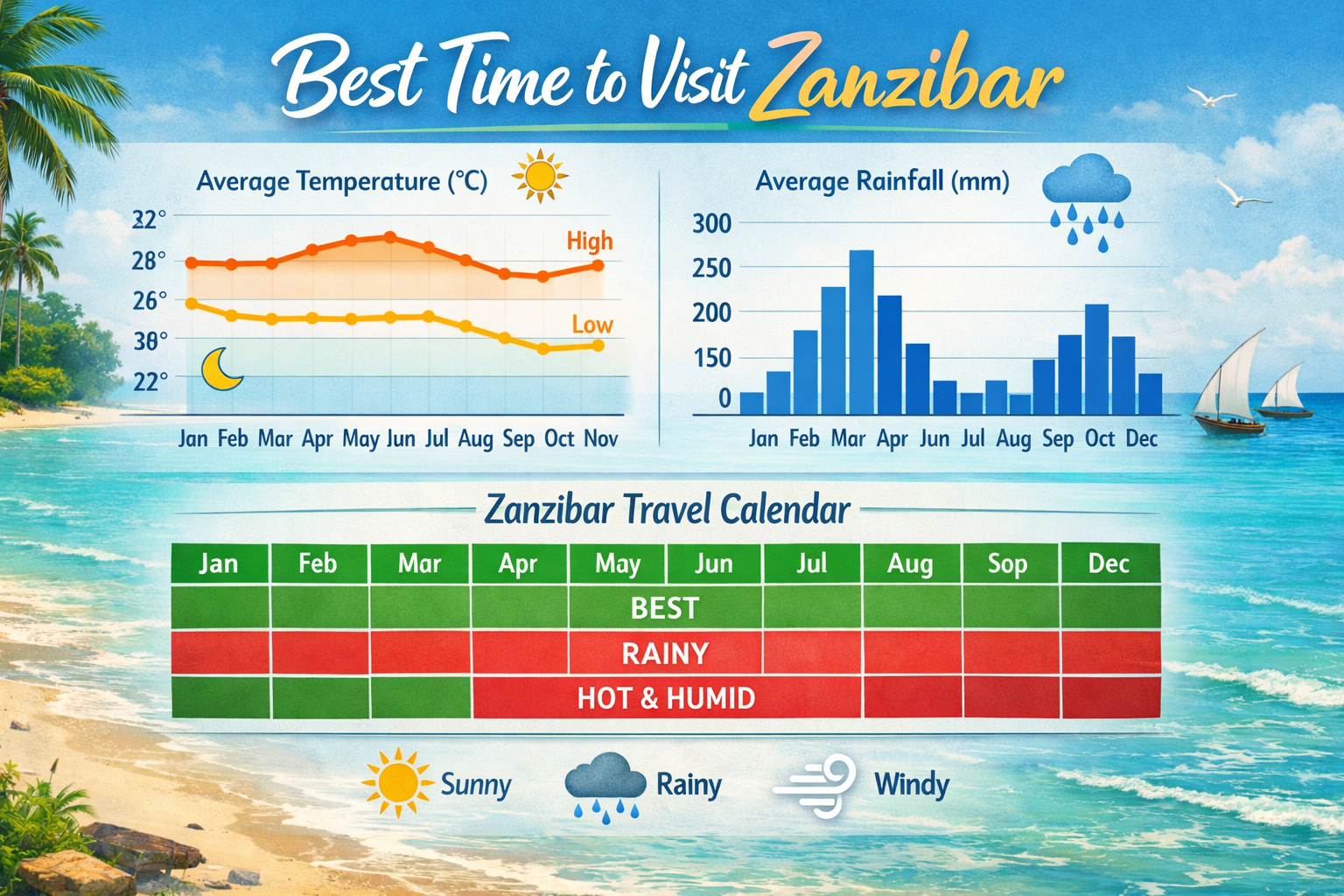
Zanzibar’s tropical climate is governed by two distinct monsoon seasons that create dramatically different travel experiences throughout the year. The archipelago sits just 6 degrees south of the equator, resulting in consistently warm temperatures but significant variations in rainfall and humidity.
The Two Monsoon Seasons
Kaskazi (Northeast Monsoon)
- Duration: December to March
- Characteristics: Hot, humid conditions with occasional short rains
- Wind patterns: Gentle northeast breezes
- Sea conditions: Generally calm with excellent visibility
Kusi (Southeast Monsoon)
- Duration: June to September
- Characteristics: Cooler, drier conditions with consistent trade winds
- Wind patterns: Stronger southeast winds
- Sea conditions: Slightly rougher but still suitable for most activities
Between these monsoons lie two transitional periods: the long rains (March-May) and short rains (October-November), each presenting unique challenges and opportunities for visitors.
Monthly Weather Breakdown: Finding the Best Time to Visit Zanzibar
January – February: Peak Season Paradise
Weather Conditions:
- Temperature: 26-32°C (79-90°F)
- Rainfall: 60-80mm monthly
- Humidity: High (75-85%)
- Sea temperature: 28°C (82°F)
January and February represent some of the best months to visit Zanzibar for weather enthusiasts. The northeast monsoon brings stable, hot conditions with minimal rainfall. However, this period coincides with peak tourist season.
Pros:
- Excellent beach weather
- Calm sea conditions perfect for diving
- Abundant sunshine (8-9 hours daily)
- Ideal for water sports
Cons:
- Highest accommodation prices
- Crowded beaches and attractions
- High humidity can feel oppressive
- Advanced booking essential
March – May: The Challenging Season
Weather Conditions:
- Temperature: 26-30°C (79-86°F)
- Rainfall: 150-300mm monthly
- Humidity: Very high (85-95%)
- Sea temperature: 28-29°C (82-84°F)
This period experiences the “long rains” and is generally not the best time to visit Zanzibar for most travelers. Heavy downpours, high humidity, and unpredictable weather patterns can significantly impact outdoor activities.
March Specifics:
- Transition month with increasing rainfall
- Some sunny periods still possible
- Lower prices begin to appear
April-May Reality:
- Peak rainy season with daily downpours
- Many beach activities cancelled
- High risk of flight delays
- Some restaurants and tours close
Travel Tip: If you must visit during this period, focus on Stone Town exploration, spice tours, and indoor cultural activities.
June – August: The Sweet Spot
Weather Conditions:
- Temperature: 24-28°C (75-82°F)
- Rainfall: 30-50mm monthly
- Humidity: Moderate (65-75%)
- Sea temperature: 26°C (79°F)
Many consider this the absolute best time to visit Zanzibar. The southeast monsoon brings cooler, drier conditions with refreshing trade winds that make the tropical climate more comfortable.
Why This Season Excels:
- Perfect weather balance: Warm but not oppressive
- Minimal rainfall: Brief, light showers if any
- Excellent sea conditions: Great visibility for diving
- Comfortable humidity: Trade winds provide natural cooling
- Wildlife viewing: Ideal for dolphin watching tours
September – October: Shoulder Season Value
Weather Conditions:
- Temperature: 25-29°C (77-84°F)
- Rainfall: 40-80mm monthly
- Humidity: Moderate to high (70-80%)
- Sea temperature: 26-27°C (79-81°F)
This transitional period offers another excellent window for determining the best time to visit Zanzibar, especially for budget-conscious travelers seeking good weather without peak season prices.
September Highlights:
- Continuation of dry season conditions
- Fewer crowds than peak months
- Excellent diving and snorkeling
- Moderate accommodation prices
October Considerations:
- Short rains may begin late in the month
- Still generally good weather
- Great value for money
- Increasing humidity toward month-end
November – December: Building to Peak Season
Weather Conditions:
- Temperature: 26-31°C (79-88°F)
- Rainfall: 80-120mm monthly
- Humidity: High (75-85%)
- Sea temperature: 27-28°C (81-82°F)
This period sees the transition from short rains into peak season, offering varied conditions depending on specific timing.
November Dynamics:
- Short rains typically end mid-month
- Increasing tourist arrivals
- Good value before peak pricing
- Variable weather requires flexibility
December Evolution:
- Return to excellent weather conditions
- Rapidly increasing crowds
- Holiday season premium pricing begins
- Booking becomes more challenging
Crowd Levels and Tourism Patterns
Understanding tourist patterns is crucial when determining the best time to visit Zanzibar based on your preferences for crowds and pricing.
Peak Season Crowds (December – February)
Visitor Volume: Highest
- European winter escapees: Fleeing cold weather
- Holiday travelers: Christmas and New Year celebrations
- Family vacations: School holiday periods
- Honeymoon peak: Popular wedding travel season
Impact on Experience:
- Beach space becomes premium
- Restaurant reservations essential
- Popular attractions require early arrival
- Water activities book out quickly
Shoulder Season Balance (June – October)
Visitor Volume: Moderate
- Weather-conscious travelers: Seeking optimal conditions
- Diving enthusiasts: Taking advantage of excellent visibility
- Budget travelers: Avoiding peak pricing
- Repeat visitors: Those who know the secret
Advantages:
- More authentic local interactions
- Easier access to popular sites
- Better photography opportunities
- More personalized service
Low Season Reality (March – May)
Visitor Volume: Lowest
- Adventure travelers: Willing to risk weather
- Budget seekers: Chasing lowest prices
- Cultural enthusiasts: Focusing on indoor activities
- Long-term travelers: Flexible itineraries
Sea Conditions and Water Activities
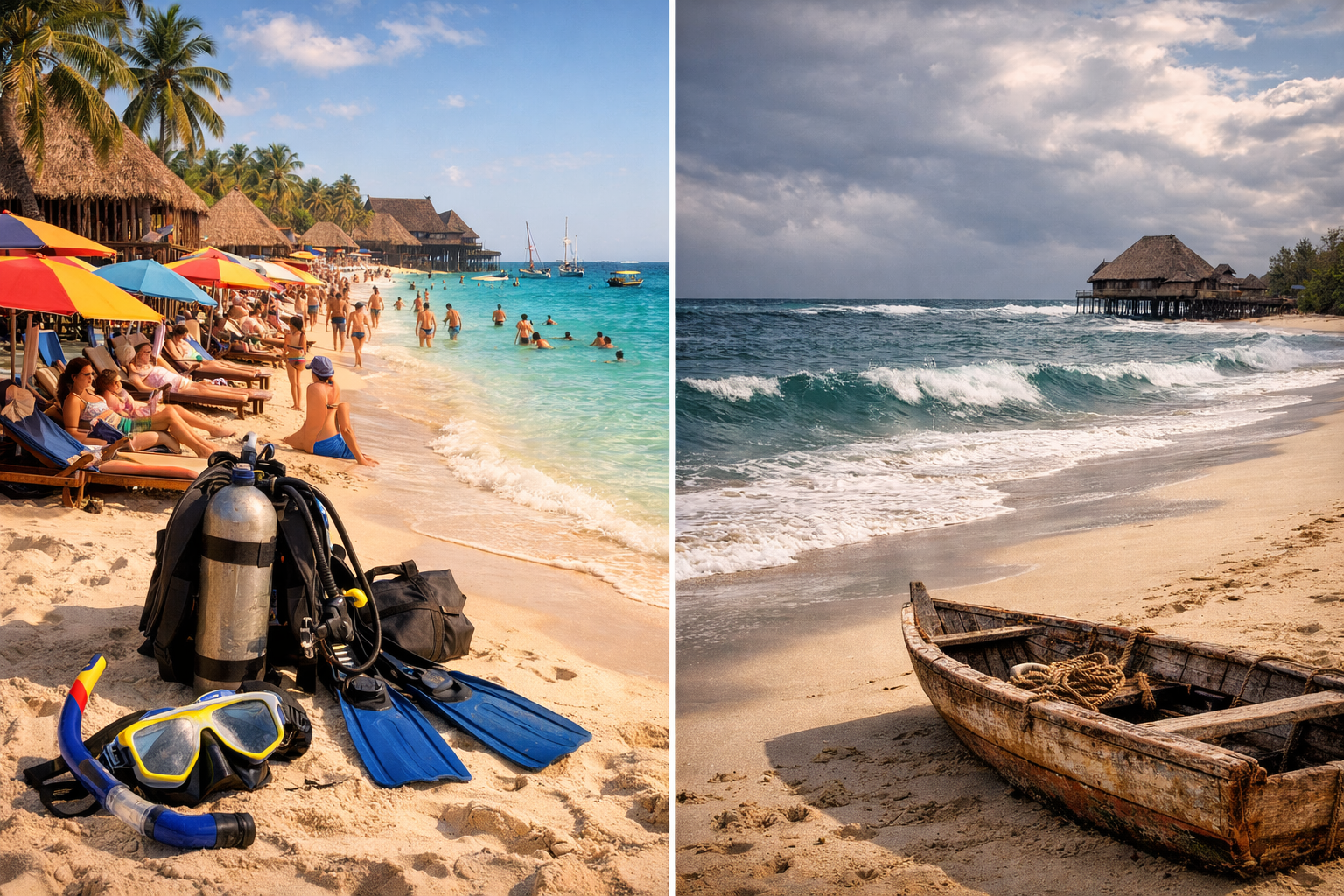
The Indian Ocean around Zanzibar offers world-class marine experiences, but conditions vary significantly throughout the year, affecting when it’s the best time to visit Zanzibar for specific water activities.
Diving and Snorkeling Conditions
Optimal Periods:
- June – September: Excellent visibility (20-30m)
- December – February: Good visibility (15-25m)
- October – November: Variable but often good
- March – May: Poor visibility, rough conditions
Seasonal Marine Life
Dry Season Highlights (June – October):
- Whale shark sightings peak
- Consistent dolphin encounters
- Coral spawning events
- Calm conditions for beginners
Wet Season Considerations (March – May):
- Reduced marine activity
- Murky water from runoff
- Cancelled boat trips
- Limited diving operations
Fishing and Sailing
Best Fishing Months:
- September – December: Peak game fish season
- January – February: Good conditions continue
- June – August: Excellent for beginners
Sailing Conditions:
- June – September: Consistent trade winds
- December – February: Light, variable winds
- March – May: Unpredictable, often unsafe
Making Your Decision: Choosing the Best Time to Visit Zanzibar
For Weather Perfectionists
Choose June through September for the most reliable conditions. This period offers the perfect balance of sunshine, manageable temperatures, and minimal rainfall risk.
For Budget Travelers
Consider October or November for excellent value. You’ll enjoy good weather while avoiding peak season premiums.
For Crowd Avoiders
June through August provides the best compromise between good weather and manageable tourist numbers.
For Families
July and August work best for school holidays, offering safe weather and excellent family-friendly conditions.
For Diving Enthusiasts
June through October delivers the best underwater visibility and marine life encounters.
Practical Planning Tips
Booking Strategies
- Peak season: Book 6-12 months in advance
- Shoulder season: 3-6 months provides good options
- Low season: Last-minute deals available but risky
Packing Considerations
- Dry season: Light, breathable fabrics
- Wet season: Waterproof gear essential
- Year-round: Sun protection and reef-safe sunscreen
Health Precautions
- Malaria prevention: Year-round concern
- Hydration: Critical during hot, humid periods
- Sun safety: Equatorial sun requires constant protection
In Short
Determining the best time to visit Zanzibar ultimately depends on balancing weather preferences, budget constraints, and activity priorities. For most travelers, June through October offers the optimal combination of excellent weather, reasonable crowds, and ideal sea conditions. However, December through February provides equally stunning weather for those willing to navigate peak season crowds and pricing.
